
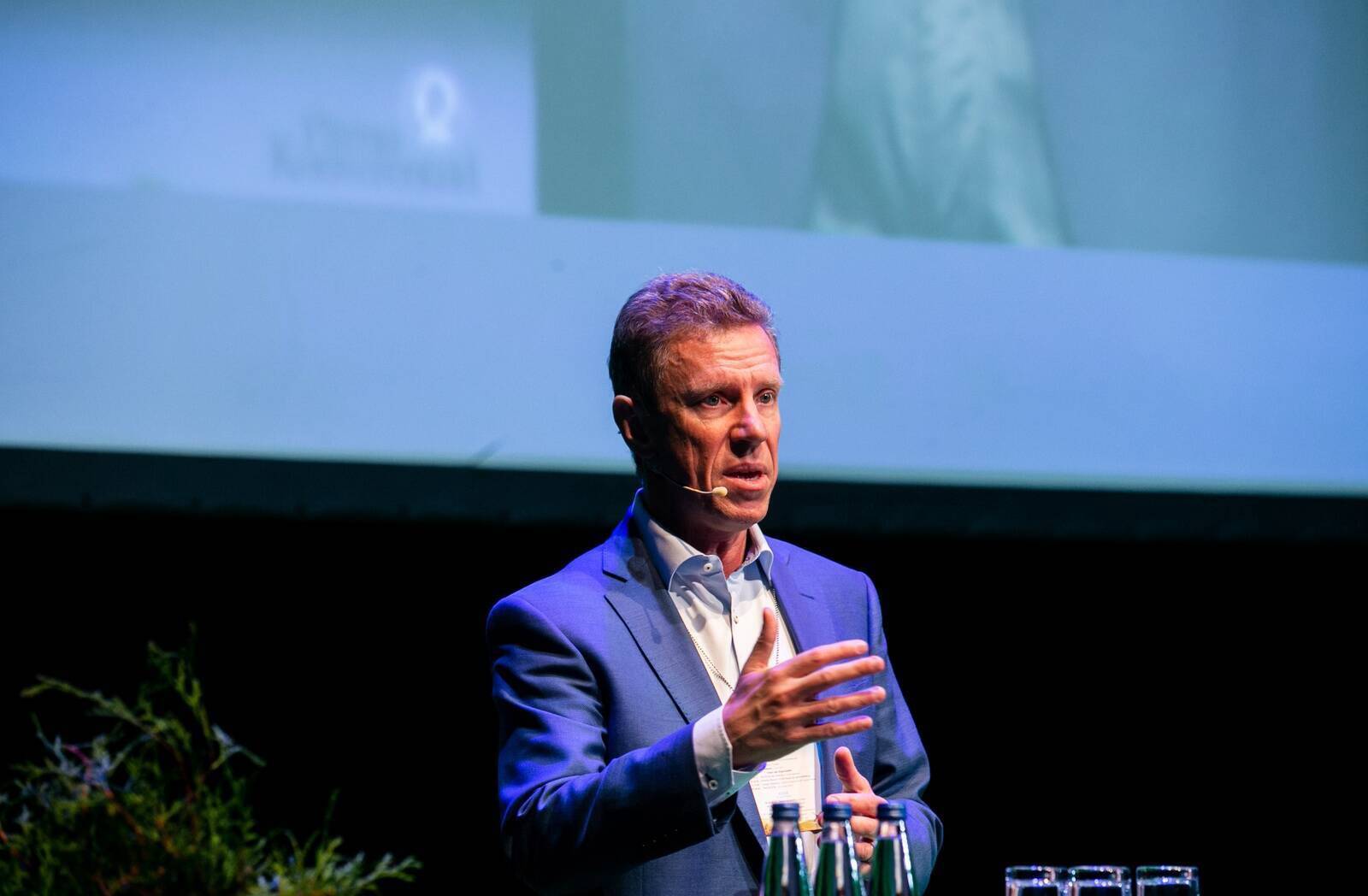
Eero Tohver, CEO of Uptime
A few years ago, the IT market was moving at a much faster pace. Companies were investing more boldly in digital solutions, demand for developers was strong, and many projects were launched simply because “something needed to be digitalised.”
The figures reflect this as well. According to monitoring data from the TAIE focus areas, the revenue of Estonia’s ICT sector grew rapidly between 2020 and 2024, reaching €6.3 billion. However, the strongest growth occurred in 2021 and 2022, after which the pace of growth slowed.
Today, we are in a very different situation – although not necessarily a bad one. IT companies simply need to rethink what they offer to their clients.
The need for IT services has not disappeared, but clients are making decisions much more cautiously. Before starting a new project, they are asking more questions: What problem will this solve? How quickly will it deliver value? And is the investment commercially justified?
In the current economic environment, this is understandable. Uncertainty, higher costs and geopolitical risks are influencing investment decisions in many companies. In some areas, such as the defence industry, cybersecurity and technologies related to critical infrastructure, demand remains strong. In many other sectors, however, new projects are being considered very carefully before being commissioned.
This does not mean that the IT sector lacks growth opportunities. On the contrary, the need for strong technology partners remains significant. However, growth will no longer come as easily as it did before.
So how should companies reposition themselves in this environment? In a more mature market, the same approaches that worked in previous years are no longer enough. While the growth of many IT companies used to be driven primarily by hiring more people and selling development hours, companies now need to think more carefully about the business outcomes their clients are actually expecting.
Clients no longer simply want a new system or additional functionality. They want to understand whether a solution will help reduce manual work, improve sales, lower risks, speed up a workflow or enable better decision-making.
AI Must Deliver Practical Value
In addition, the rapid development of artificial intelligence has changed both client expectations and the way IT companies organise their work. Businesses want to explore the opportunities offered by AI, but there is also a great deal of uncertainty in the market. In some organisations, the question arises: is it worth starting a new development project today if an AI tool may soon solve the same problem more easily or at a lower cost?
This question is understandable, but often oversimplified. AI can accelerate and simplify many tasks, but it does not replace the need to understand a company’s processes, data, risks and objectives. A tool alone does not make a company more efficient – value is created when the right solution is chosen for the right problem and when technology is implemented in the most effective way.
Clients no longer need only a technical executor who builds predefined functionality. Increasingly, they need a partner who can help determine whether the desired AI solution makes sense at all and what benefits can realistically be expected from it. AI does not automatically produce better results, but when used correctly, it can help work be done faster and to a higher standard.
For this reason, the ability to use AI is increasingly becoming basic hygiene for IT companies. Clients may not always ask which tools a service provider uses, but they expect their partner to work in a modern and sensible way. If certain tasks can be done faster, more accurately or at lower cost, that benefit should also reach the client.
Growth Will Come from a Clearer Focus
In uncertain times, clients choose their partners more carefully. They want to know that the service provider has the necessary skills, stability and sense of responsibility to see a project through to completion. This is especially important for business-critical systems and more complex integrations.
At the same time, a strong partner does not always mean the largest partner. In some situations, a large team and a broad range of services provide reassurance. In others, the better choice may be a smaller team with deep experience and a clear focus on a specific field.
What matters is not size in itself, but the ability to genuinely solve the client’s problem. This may require industry knowledge, strong technical expertise, transparent ways of working, solid project management or simply honest communication. Clients judge a partner by whether promises are kept and whether the provider is able to take responsibility when challenges arise.
The current moment is a good opportunity for Estonian IT companies to review their focus. If the market no longer grows as easily as before, companies need to choose more clearly what they are strong at and which client problems they are best positioned to solve.
For some companies, the answer may lie in deeper industry specialisation. For others, it may be the practical use of AI and automation. For others still, it may be cybersecurity, data solutions, e-commerce, industrial systems or public-sector processes.
There is no single formula. What is clear, however, is that operating under a “we do everything for everyone” model will become significantly more difficult. When clients are more cautious and more demanding, service providers must be able to state clearly what they are good at – and why the client should trust them in particular.